Protected work
This case study is password protected. Enter the password to continue.
Have a copy of my resume? You'll find the password on it.
Skin science, no appointment required
Team: Founding Product Designer (myself), Founder, Product Manager, Full stack Engineer, Machine Learning Engineer.
Getting real answers about your skin shouldn't require a months-long wait for a five-minute dermatologist appointment, or hours of wading through product ads that all promise the same thing. Thea is a consumer AI app that helps people understand their skin type, identify the root causes of their concerns, and find products that are actually right for them. Backed by science, not sponsored posts.
Founding Product Designer. End-to-end design from 0 to 1, including product strategy, design system, visual identity, and investor-facing concepts that supported a $5M seed raise.
Onboarding
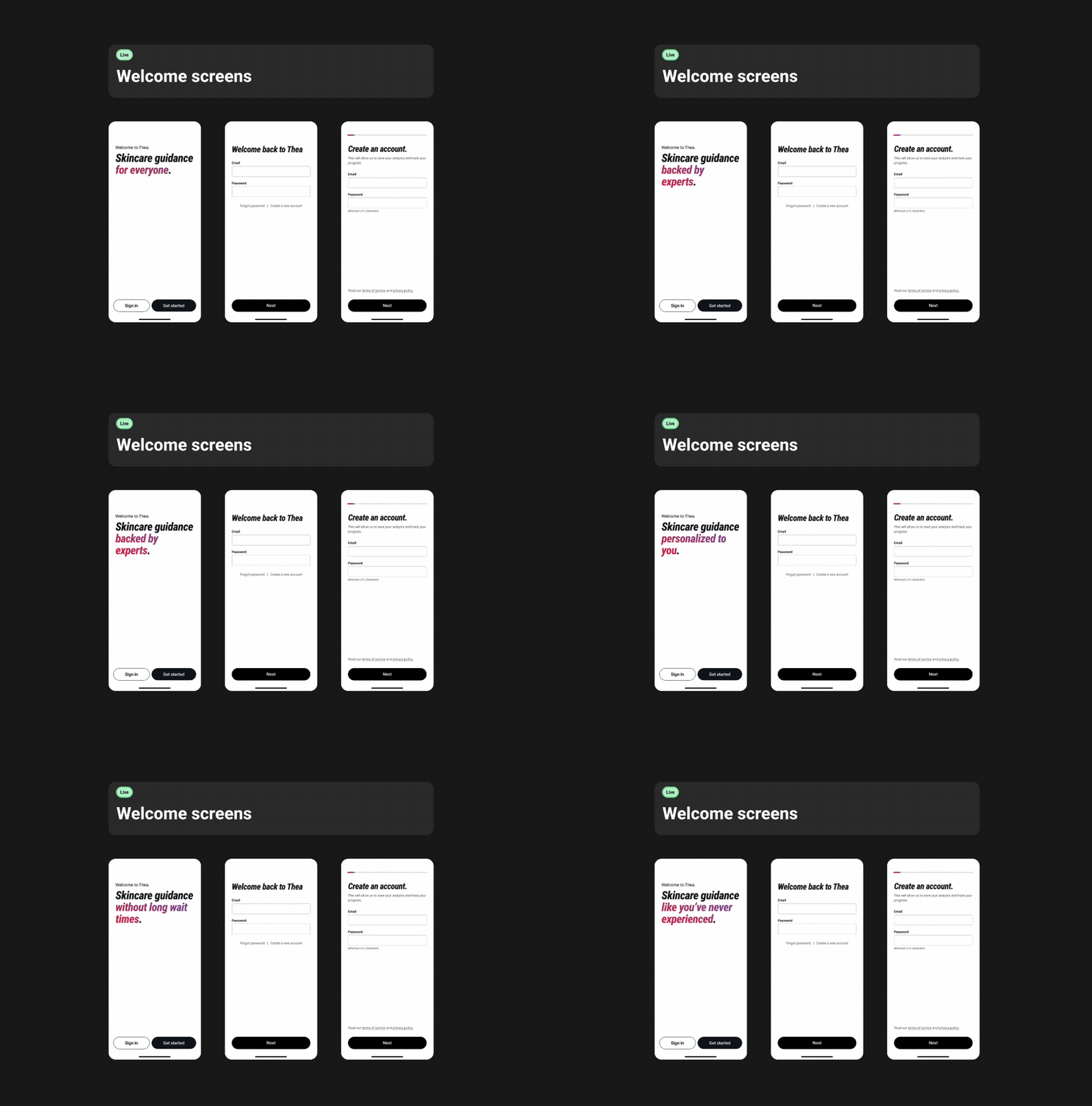
- Gather all necessary info about the user's demographics, preferences, and medical background.
- Begin to build trust with the user by mirroring an experience they might have with a skincare professional.
Analysis
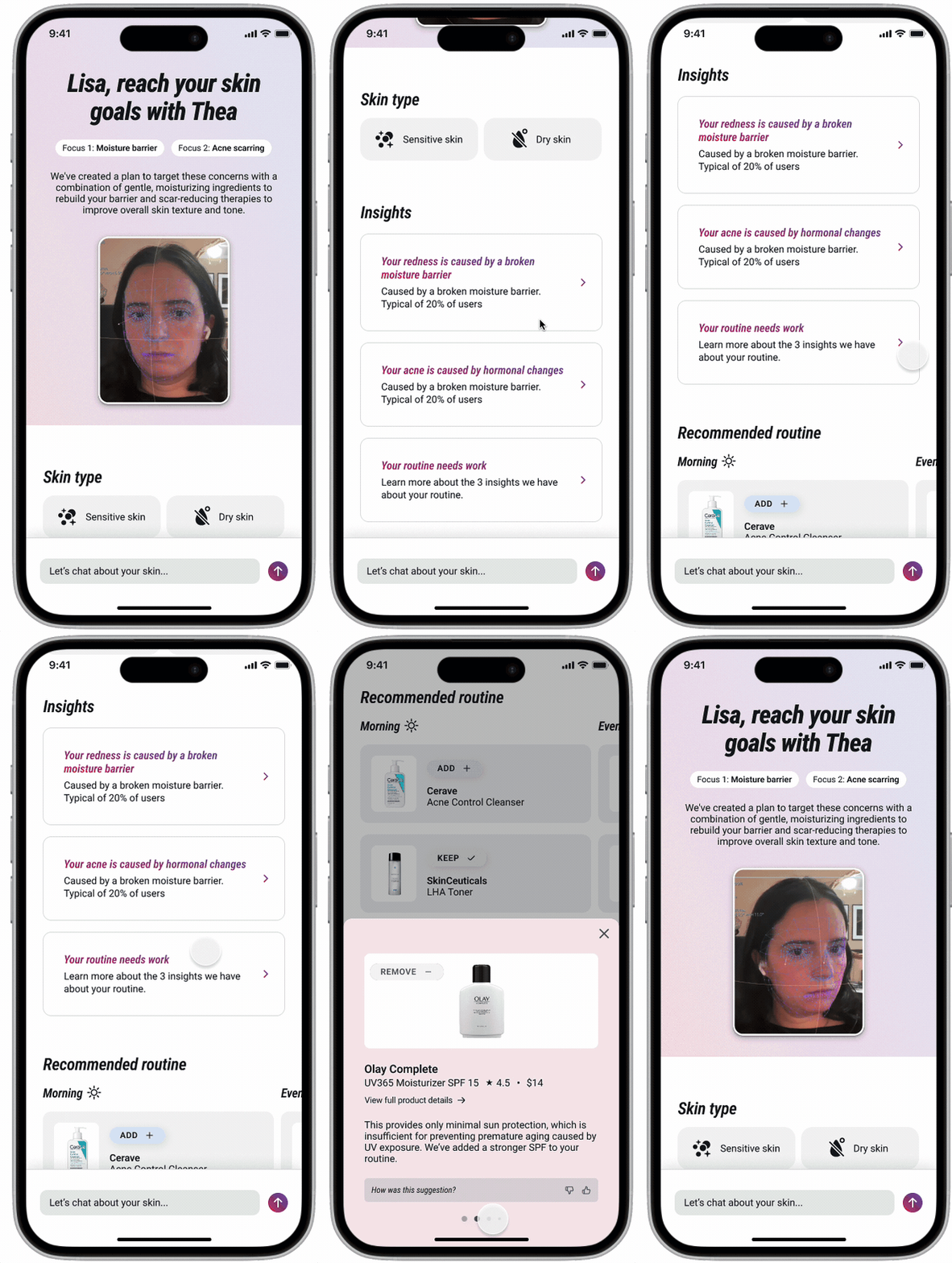
After onboarding the user is taken to their skin analysis. The goals of the analysis are:
- Provide the user with a report about their skin.
- Build trust with the user.
- Provide detailed information without overwhelming the user.
Breakdown of each section
A digestible snapshot of the analysis that sets the user's expectations for the rest of the report, so they always know what's coming and why it matters.
Designed primarily to reassure users that their unique skin type is being accounted for. User interviews showed most people already know their skin type and what it means for them, so I positioned it near the top as a quick reference point for the analysis without letting it take up much space.
Clearly presents learnings derived from the intake form, routine input, and facial scan. I worked closely with product and engineering to make sure we could surface insights that were both personalized and genuinely valuable, with each one tappable so users can go deeper on their own terms.
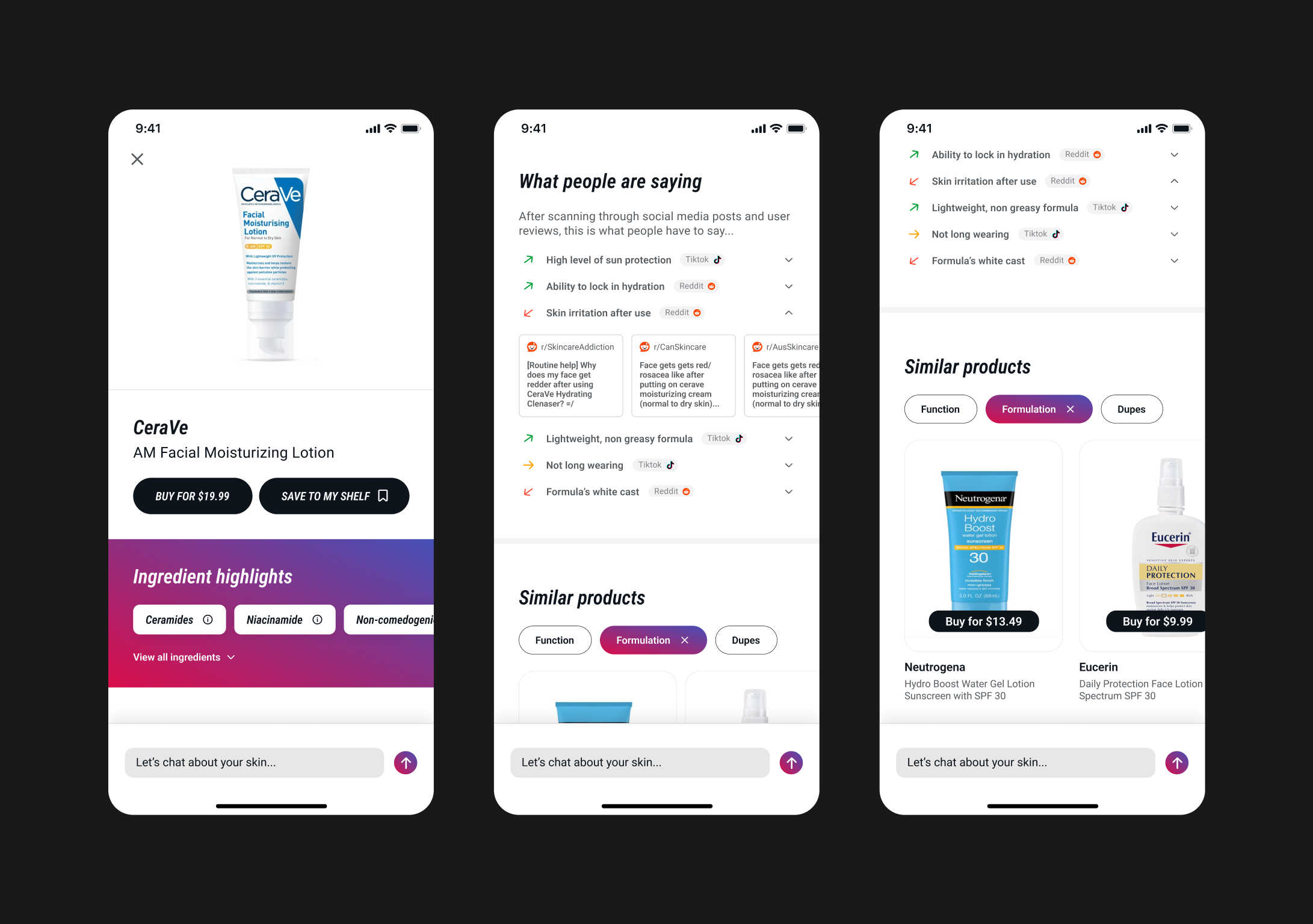
Wraps up the analysis with a full recommended routine, emphasizing the products users already use when those align with their skin and goals. I also surfaced the products we recommend removing, so the reasoning is transparent. Tapping a row reveals more detail and lets users "like" or "dislike" a recommendation — feedback that's saved and used to help the AI model learn more about the user over time.